

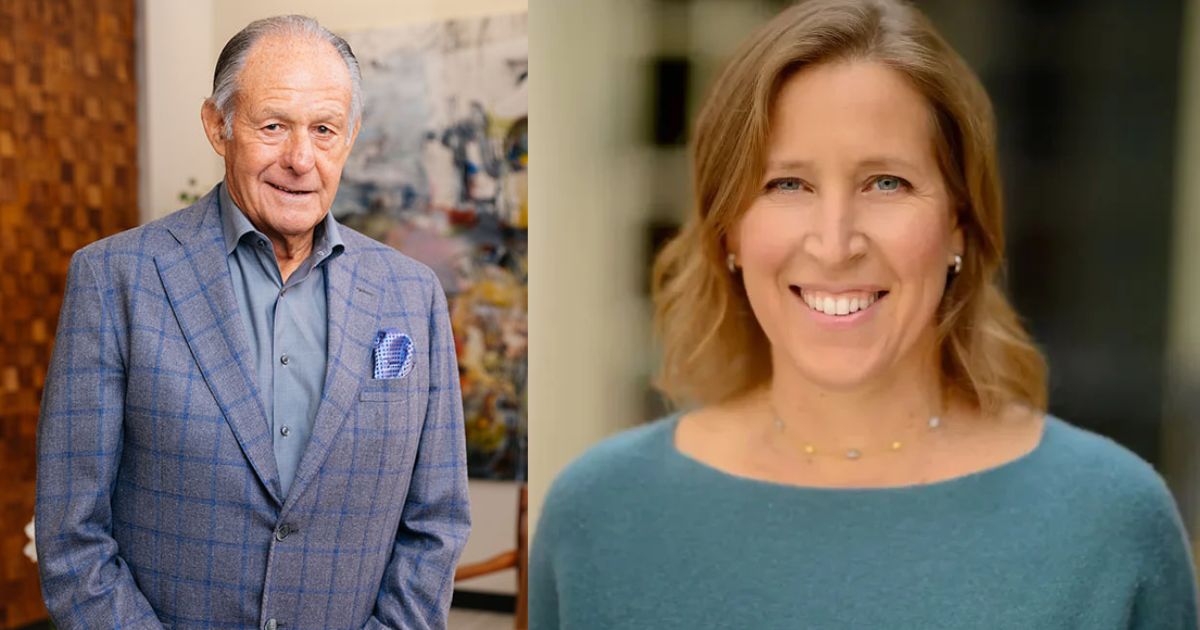
Search for Susan Wojcicki and John Sobrato and you’ll find two names tossed together with almost no explanation. Were they partners? Business rivals? Relatives? That confusion wastes your time. Here’s the short version.
One leader built the digital products billions of people use. The other built the offices, labs, and homes around them. This guide separates fact from guesswork and adds updated information through 2026.
One honest note first: no public record shows a joint company or partnership between them. They connect through the same valley, the same industry, and the same big lesson about building something that lasts.
Comparing Two Great Leaders: Core Details at a Glance
Susan Wojcicki led YouTube as a digital executive, while John Sobrato built a real estate empire. Here’s the profile summary for both.
| Detail | Susan Wojcicki | John Sobrato |
| Full name | Susan Diane Wojcicki | John Albert Sobrato |
| Age | Died August 9, 2024 at 56 (born July 5, 1968) | 87 (born May 23, 1939) |
| Birthplace | Santa Clara County, California | San Francisco, California |
| Height | Not publicly disclosed | Not publicly disclosed |
| Weight | Not publicly disclosed | Not publicly disclosed |
| Spouse | Dennis Troper | Susan (Sue) Sobrato |
| Children | Five | Three |
| Net worth | Estimated between $500 million and $765 million, depending on the source | Family wealth reportedly between $6 billion and $8.8 billion across recent estimates |
| Profession | Business executive, former YouTube CEO | Real estate developer, founder and chairman of The Sobrato Organization |
| Known for | Google’s early growth, AdSense, YouTube | Office campuses, housing, and large scale giving |
| Social handles | Not publicly disclosed | Not publicly disclosed |
Treat net worth figures as estimates. Each outlet uses its own method.
The Digital Path of Susan Wojcicki: Shaping Google and YouTube
Susan Wojcicki helped build Google from a garage startup into an advertising giant. She later ran YouTube for nearly a decade.
Her story starts in 1998. She became Google’s sixteenth employee, and the founders set up their first office in her Menlo Park garage that same September. From there she moved into product work. She helped launch AdSense and spearheaded the first Google Doodles.
Her biggest early bet came in 2006. She recommended and then managed the $1.65 billion purchase of YouTube. The following year she handled the DoubleClick deal. Both moves shaped how online video and online ads make money today.
She became YouTube’s CEO in February 2014 and oversaw products such as YouTube Music, Premium, and TV. The platform grew past two billion users during her tenure. She stepped down in February 2023, and Neal Mohan took over.
Her health news followed. Her family announced that she died at 56 after living with non small cell lung cancer for two years. Her husband, Dennis Troper, shared the news on August 9, 2024.
The Physical Foundation: John Sobrato and Real Estate Development
John Sobrato built the physical spaces where Silicon Valley companies grew. His work gave startups and giants a place to hire, test, and ship.
He started in real estate while still a student at Santa Clara University and founded The Sobrato Organization in 1979. His son, John Michael Sobrato, took over leadership in 1998, and the company grew to more than 110 commercial buildings and over 30 apartment complexes. The firm has developed well over 15 million square feet of commercial space, according to published business profiles.
Tenants have included big names. The firm built and leased office campuses to companies such as Apple and Yahoo. Today the Sobrato Organization covers three arms: development, Sobrato Capital for investing, and Sobrato Philanthropies for giving.
Where Real Estate Meets Digital Media: Susan Wojcicki and John Sobrato
Real estate and digital media meet in one famous place: Wojcicki’s garage. That story shows why both leaders belong in the same conversation.
Wojcicki rented her Menlo Park garage to Larry Page and Sergey Brin for $1,700 a month, and they worked there for five months before moving to a formal office. She wanted help paying her mortgage. Google later bought the 1,900 square foot house from her. A small piece of property launched one of the biggest companies ever.
John Sobrato’s story works at a larger scale. His campuses gave growing companies room to expand once garages stopped being enough. Here’s how the two layers fit together.
| Layer | What it provides | Example from these leaders |
| Physical space | Offices, labs, housing | Sobrato’s commercial campuses |
| Digital products | Platforms, ads, video | Wojcicki’s work on AdSense and YouTube |
| Early stage bridge | Cheap starter space | Wojcicki’s rented garage |
No source shows the two ever worked together. Their link is the ecosystem, and that link is real.
Comparing International Wealth: Maria Asuncion Aramburuzabala and Susan Wojcicki
Maria Asuncion Aramburuzabala is a Mexican businesswoman whose wealth came mostly from inheritance and a major sale. Wojcicki’s wealth came mostly from salary, stock, and equity as an executive.
Aramburuzabala inherited a stake in Grupo Modelo, the maker of Corona, after her father died in 1995. Her family’s stake was sold to Anheuser Busch InBev in 2013 as part of a $20 billion transaction. She now chairs Tresalia Capital, an investment firm. Her net worth was estimated at $9.1 billion as of January 2026.
| Point | Maria Asuncion Aramburuzabala | Susan Wojcicki |
| Country | Mexico | United States |
| Main wealth source | Family brewery stake and later investments | Executive career at Google and YouTube |
| Path to wealth | Inherited and then grown | Earned through a corporate career |
| Recent estimate | About $9.1 billion to $9.55 billion (2026) | Between $500 million and $765 million (estimates) |
The two women aren’t connected in business. The comparison simply shows two routes to success: building inside a company or growing an inherited asset into a new investment platform.
Investing and Education: John Paulson and Susan Wojcicki
John Paulson is a hedge fund manager. Susan Wojcicki was a tech executive. They share one clear link: Harvard.
Paulson graduated from Harvard Business School in 1980. He founded Paulson & Co. in 1994. In 2015 he gave $400 million to Harvard, and the engineering school took his name. It was the largest single gift the university had ever received. Paulson’s wealth estimates swing widely. Forbes put it near $11.2 billion in 2015. More recent online estimates are much lower, so treat any single number carefully.
Wojcicki also had Harvard ties as an alumna of the class of 1990. She later added an MBA from UCLA.
The lesson is the same for both. Education opened doors. Paulson turned that into a record gift. Wojcicki turned hers into a career that shaped the internet. Again, no source documents a direct business tie between them.
Giving Back: Philanthropy and Community Impact
Sobrato leads this group in organized giving. His family turned wealth into a long term community program.
- Giving Pledge: In 2012 the Sobratos became the first two generation family to sign the pledge, promising to leave their estates to philanthropy.
- University gift: The family gave $100 million to Santa Clara University in 2017.
- Education: The SEAL model helps young Spanish speaking students build English skills by third grade.
- Nonprofit support: The foundation offers office space and flexible grants. Sobrato describes general operating grants as a sign of trust.
- Total giving: A 2021 report said Sobrato Philanthropies had given away more than $644 million.
Wojcicki gave through advocacy. She pushed for paid family leave, gender parity in tech, and support for Syrian refugees. Paulson gave through one very large education gift. Each model works. Sobrato’s is steady and local, Paulson’s is concentrated, and Wojcicki’s was built on policy and workplace change.
Strategic Business Lessons from Silicon Valley Pioneers
The main lesson is to build what others will need. Here are six practical takeaways.
- Spot the hidden asset. Wojcicki turned a spare garage into a partnership with two founders.
- Back the underdog early. She argued for buying YouTube when it was still small.
- Think in layers. Sobrato didn’t build apps. He built the spaces where app makers worked.
- Hand off on purpose. His son took over leadership in 1998, and the firm kept growing.
- Give while you’re active. The Sobratos advocated giving while living, not only after death.
- Treat education as an investment. Paulson’s gift and Wojcicki’s degrees both point here.
Overcoming Challenges in Fast Changing Markets
Both leaders worked in markets that change quickly, and each faced steady pressure.
YouTube under Wojcicki dealt with tough debates about harmful content, advertiser trust, and how creators get paid. Her approach leaned on policy updates and new products. Public opinion on these topics stayed mixed throughout her tenure.
Real estate has its own cycles. Office demand rises and falls with hiring waves and remote work. Housing costs in Silicon Valley strain nonprofits and workers alike. Sobrato has said building alone won’t fix that, and he argues philanthropy has to help too.
Paulson’s story shows market risk from another angle. His fortune grew sharply after betting against the subprime mortgage market in 2007 and has moved up and down since. Aramburuzabala’s story shows a different answer: sell a concentrated asset at a high price and spread the proceeds across new investments.
The common thread is adaptation. Leaders who last in fast markets keep learning.
Why Their Legacies Continue to Matter Today
Their legacies matter because people still use what they built. Millions watch YouTube daily. Thousands work in buildings that developers like Sobrato shaped.
Wojcicki’s legacy also includes a human side. A final message she prepared was released in November 2024, three months after her death. In it she stressed creativity, teamwork, and sticking to core values. Many readers see it as a leadership guide in her own words.
Sobrato’s legacy keeps growing through his foundation and family. The structure he set up lets giving continue across generations.
For anyone building a career or a company, the message is practical. Digital ideas need physical and financial support. Strong people also give back to the places that raised them.
Frequently Asked Questions
Did Susan Wojcicki and John Sobrato work at the same company?
No. Wojcicki worked at Google and YouTube, while Sobrato founded and chaired The Sobrato Organization. No public source shows a joint company.
What is John Sobrato most famous for?
He’s best known for founding The Sobrato Organization, a major Silicon Valley real estate firm. He’s also known for large scale philanthropy through Sobrato Philanthropies.
How are Maria Asuncion Aramburuzabala and Susan Wojcicki connected?
They aren’t connected in business. Articles pair them to compare two paths to wealth: an inherited brewery stake versus a long executive career.
What is the connection between John Paulson and Susan Wojcicki?
Both have Harvard ties, and both are tied to education themes. No source shows a business partnership between them.
How did Susan Wojcicki help Google grow in its early days?
She helped launch AdSense and shaped early products. She also backed the YouTube acquisition, which opened a huge video and advertising market.
Conclusion
Susan Wojcicki and John Sobrato never built a company together. Still, their stories fit like two halves of one puzzle. Wojcicki shaped the digital world through Google ads and YouTube. Sobrato shaped the physical world through offices, housing, and community giving.
Add Aramburuzabala’s investment path and Paulson’s education gift, and you get a wider picture of what success looks like at scale. Use their lessons in your own work: find the hidden asset, build for the long term, and give back early.

Arthur Dean is a celebrity and entertainment writer at Only Xtylish, covering celebrity news, careers, achievements, lifestyle, and popular culture. He focuses on researching publicly available information, presenting relevant details clearly, and creating engaging, reader friendly articles. His approach emphasizes accuracy, originality, context, and responsible digital publishing.